Table of Contents
Credit Card Setup Guide
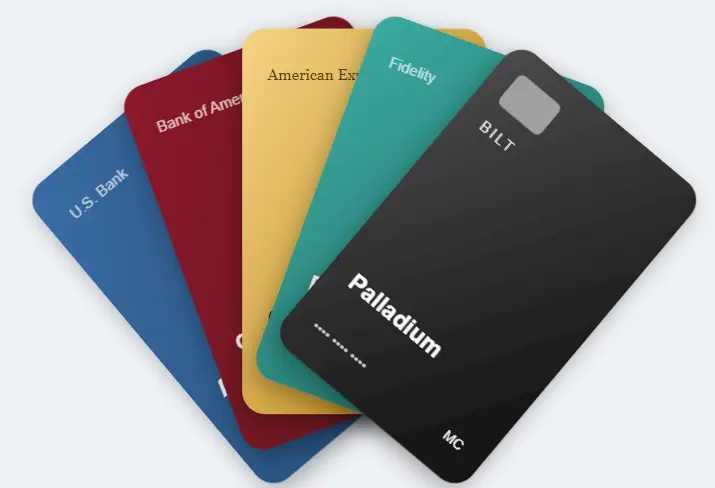
When people find out I'm into credit cards, I almost always get asked "What credit cards should I get?" Although the answer is very nuanced and depends heavily on the person, there are still basic principles I would recommend following. In this article, I will outline some starting points and sample credit cards to help you choose your credit card setup.
Credit Card Goals
The first thing that everyone should examine is their goal for credit cards. For most beginners, the credit card game boils down to 2 goals:
- Spend less
- Travel for less
The first option is what the community calls to as a "cashback setup". The goal is to get the most amount of cash back from your spend, hence the term. Cash back setups offer no frills in the redemption process and allow you to not think too much about credit cards once the setup is complete. Cash back setups must have an easy method of redeeming for a statement credit or to a bank account at a rate of 1% or 1 cent per bank point.
In contrast, travel enthusiasts will look to credit cards points and miles to get outsized value. There are 8 currencies from the following companies at the time of publishing: Amex, Bilt, Capital One, Chase, Citi, Rove, US Bank, and Wells Fargo. These points are able to transfer to airline and hotel partners that offer opportunities to get more than 1 cent per point earned. In essence, transferable points require work to get value on the redemption side and pose a risk of poor value.
Credit Card Setup Basics
There are 3 buckets of credit card types to consider when creating your portfolio of cards. Each of these buckets fulfill a different niche, with the decreasing order of importance. Bucket 3 is usually tailored to specific interests and the most optional. As such, each of the subsequent setups will only include cards in buckets 1 and 2.
Bucket 1
The first bucket is a catch-all card. In this day and age, all catch-all cards should earn a minimum of 2% or 2x on every purchase. Ideally, the card will have no limits, no foreign transaction fees, and no annual fees. There are currently plenty of cards that offer all 3. Only card is needed to fill this role in a setup.
Bucket 2
Bucket 2's only rules is that they must have at least a bonus category greater than the earn rate of bucket 1. For most setups, this means that the bucket 2 cards must have a category earn rate of greater than 3% or 3x.
Bucket 3
The last bucket contains cards that do not require spending to be valuable. Examples of these include: hotel credit cards that give a free night certificate, an airline credit card that gives free checked bags, companion passes or lounge access, or premium credit cards that give access to special services and lounge access. Some of these cards may double-dip as a bucket 2, but the primary reason for holding the card is to get outsized value through their perks.
Best Simple Setup
This first setup is almost as simple as it gets. This is a no annual fee, 2 card setup that offers plenty of flexibility in redemption options while keeping the earning options simple.
The superpower of the Wells Fargo system is that cashback earned from credit cards can be converted to transferable points. Points earn from credit cards can also be converted
into cash back, giving the ultimate redemption options flexibility. It allows beginners to also dabble into the points and miles world with the flexibility of going back to cashback
if it doesn't work out.
In this setup, the first bucket is covered by the Wells Fargo Active Cash card, while the second bucket is covered by the Wells Fargo Autograph card. In addition,
the Wells Fargo Autograph card comes with cellphone insurance when paying your phone plan with this card. That pairs well with the 3x phone plans multiplier.
Only the Wells Fargo Autograph card comes with no foreign transaction fees, so take care to only use that card abroad.
| Card | Category | Earn Rate |
|---|---|---|
| Wells Fargo Autograph | Restaurants, Travel, Gas, Transit, Streaming Services, Phone Plans | 3% |
| Wells Fargo Active Cash | Everything Else | 2% |
Transferable Points Setup
I didn't name this section as a "simple" transferable points setup. That is because I truly believe the Bilt Palladium card is a one and done card. This card earns a base rate of 2x Bilt points and 4% Bilt cash per dollar on everything. If you redeem the 4% Bilt cash purely for your rent or mortgage and your non-housing spend does not exceed your housing cost, you earn effectively 3.33x Bilt points per dollar. If you redeem your 4% Bilt cash for the "Points Accelerator" option, you are effectively earning 3x Bilt points per dollar, up to $25,000 of spend a year. See this article for more on the Bilt math. The Bilt Palladium card essentially grants a minimum of 3x Transferable points per dollar. The card also comes with credits to help justify the annual fee and a Priority Pass membership for airport lounge access.
The reason why I didn't include other cards with earn rates greater than 3x is because Bilt frequently offers transfer bonuses of 100% or more for their most loyal members on the first of the month. Bilt has elite status tiers based on non-housing spend in a calendar year. These status tiers reward loyalty to their program. They frequently run transfer bonuses on the first of the month whose rate increases based on Bilt status. Transfer bonuses could even double your 3x Bilt points earn rate to 6x Bilt points. By engaging with the Bilt program alone, you could learn the tricks of Bilt cash and get even more out of it. Not to mention other partnerships like Rakuten and Lyft. Bilt also has the best, bar none, set of transfer partners. The only notable programs that aren't a part of Bilt but are with other banks is American Airlines, ANA, and EVA. Otherwise, they have rare transfer partners like Alaska Airlines, Hyatt, JAL, and United.
If you can't tell, I hold Bilt's program in high regard. Yes, they have their shortcomings. However, their points are the most valuable. From American economy flights with Alaska, to Japan Airlines first class with JAL miles, to Hyatt hotels, they are a program that is both easy to get into as a beginner and has room to learn as a pro.
Maximize Cashback Setup
The next setup is one that might be the most rewarding for those that are willing to open multiple cards and setup multiple credit card accounts with different banks. This setup will contain cards with $0 annual
fees and do not need additional subscriptions (e.g. Amazon Prime) to open. One notable exception to these rules are the AAA credit cards. The cards do not require the AAA subscriptions, cost $0, and even earn
among the highest cashback rates in their respective grocery and gas categories. However, there have been reports of card denials from certain regions of zip codes. If you are curious and would like the card, try
this link. Because of the uncertainty, the AAA cards will not be included in the setup below but feel free to slot them in as you see fit.
The setup below gives a comprehensive 4-5% cashback on major categories through the use of multiple bucket 2 cards.
The categories I am focusing on are what I consider the top 7 categories most people usually spend that could have credit card bonus categories: Rent/Mortgage, Utilities, Dining, Grocery,
Gas/EV Charging, Travel, and Everything Else.
| Card | Category | Earn Rate |
|---|---|---|
| US Bank Altitude Go | Dining | 4% (up to $2,000 a quarter) |
| US Bank Altitude Connect | Gas, Travel | 4% (up to $1,000 a quarter for Gas) |
| Aven Rewards Visa | Grocery | 6% (up to $10,000 a year) |
| Bank of America Customized Cash Rewards | Rent (see more) | 0.5%-2.75% (up to $2,500 a month) |
| Max Cash Preferred Visa Signature | Home Utilities and Internet | 5% (up to $2,500 a quarter) |
| US Bank Cash+ | Cell Phone Providers and Ground Transportation | 5% (up to $2,500 a quarter) |
| Fidelity Rewards Visa Signature | Everything Else | 2% |
For this no annual fee setup, there are quite a few additional travel related perks. The US Bank Altitude Connect card comes with 4 priority pass visits each year and a 5 GB / 15 day GigSky international e-sim plans. Both the US Bank Altitude Connect and Fidelity Rewards Visa Signature come with a $100 Global Entry/TSA Precheck credit as well.
One thing to keep in mind is that many cellphone, internet, and home utilities providers may charge a convenience fee for paying with credit cards. In those cases, please be sure to do the math before choosing to pay with credit cards.
My Setup
My setup takes a hybrid approach to maximize the cashback earned, while also dipping into the coupons and travel perks of American Express.
My approach also tries to minimize the number of bank apps I have to get for credit cards. As such, I only need a total of 4 banking apps.
For context, Bank of America has a preferred rewards program where you will earn increasing amount of rewards on BoA credit card spend the more assets you have Bank of America and Merrill Edge accounts (such as
checking, savings, brokerages, CDs, and IRAs). These increased rates only apply for BoA specific cards, (except Norwegian Cruise Line Mastercard for some reason).
The boosted rates are as follows:
- Member ($0-$29,999): 10%
- Preferred Plus ($30,000-$99,999): 25%
- Preferred Honors ($100,000-$999,999): 50%
- Premier ($1,000,000+): 75%
| Card | Category | Earn Rate |
|---|---|---|
| American Express Morgan Stanley Blue Cash Preferred | Groceries and Streaming Services | 6% |
| American Express Morgan Stanley Platinum | Flights | 5% |
| Bank of America Customized Cash Rewards 1, 2 and 3 | Rent | 4.5% | Bank of America Customized Cash Rewards 4 | Online Shopping | 4.5% | Bank of America Susan G. Komen Customized Cash Rewards | Gas | 4.5% |
| Bank of America Premium Rewards | Dining, Travel | 3% |
| Everything Else | 2.25% | |
| US Bank Cash+ | Home Utilities, Ground Transportation | 5% |
| Verizon Visa Signature | Internet, Phone Plan | 1% ($10 Autopay Discount) |
For me, the 2 Amex card's annual fees are offset by the coupons of services that I would've purchased anyway. In addition, my Amex Platinum card mainly serves as a bucket 3 card for lounge access perks. Just because I find value in a setup does not mean you will and vice versa. Advanced credit card setups are tailored to the individual which is what makes this game fun!